


Abstract
We implement the hierarchical decomposition introduced in [Ta15], to construct uniformly bounded solutions of the problem $\nabla\cdot U = F$, where the two-dimensional data is in the critical regularity space, $F\in L^2_{\#}(\mathbb{T}^2)$. Criticality in this context, manifests itself by the lack of linear mapping, $F\in L^2_{\#}(\mathbb{T}^2)\to U\in L^{\infty}(\mathbb{T}^2,\mathbb{R}^2)$ [BB03]. Thus, the intriguing aspect here is that although the problem is linear, the construction of its uniformly bounded solutions is not.


Introduction
We are concerned with uniformly bounded solutions of the equation \[\nabla\cdot U=F,\quad U\in L^{\infty}(\mathbb{T}^2,\mathbb{R}^2), \quad F\in L^2_{\#}(\mathbb{T}^2),\] where $L^2_{\#}(\mathbb{T}^2)$ is the space of $L^2$ integrable functions over the 2-dimensional torus $\mathbb{T}^2$ with zero mean.
The classical Helmholtz solution $U_{Hel}=\nabla\Delta^{-1}F$ is not always uniformly bounded. And what's more, we are not able to construct a solution linearly which is uniformly bounded [BB03].
Inspired by the idea of hierarchical decompositions in image processing [TNV04], Tadmor [Ta09] introduces a constructive procedure to solve the equation: the solution is given by hierarchical decompositions $U_{Bdd}=\sum u_j$, where the $\{u_j\}$'s can be computed recursively by the following minimizers, \[u_{j+1} = \arg\min_{u} \left\{\|u\|_{L^{\infty}} + \lambda_1 2^j\|F-\nabla\cdot(\sum_{k=1}^j u_k) -\nabla\cdot u\|_{L^2}^2\right\}, \quad j=0,1,\cdots.\] Here $\lambda_1$ is a sufficiently large parameter to avoid trivial solution $u_1\equiv 0$.
Analysis on the minimization problem and its dual
We rewrite each minimization step of the hierarchical decompositions in the following form, \[\bar{u}=\arg\min_{u} \left\{\|u\|_{L^{\infty}}+\lambda\|f-\nabla\cdot u\|_{L^{2}}^2\right\}.\] Here, we seek a minimizer $\bar{u}:\mathbb{T}^2\rightarrow\mathbb{R}^2$ with $L^{\infty}$ norm defined as $\|u\|_{L^{\infty}}:=\mathrm{ess } \sup_{x} \sqrt{u_1^2(x)+u_2^2(x)}$, $f$ is an $L^2$ function with zero mean, which stands for $\displaystyle F-\nabla\cdot(\sum_{k=1}^j u_k)$, $j=0,1,\cdots$, and $\lambda$ is a sufficiently large parameter, which stands for the dy scale $\lambda_1 2^j, j=0,1,\cdots$. We also assume Neumann boundary condition for the solution $u\cdot {\mathbf n}=0$ for future simplicity.
To circumvent the difficulty of $L^{\infty}$ norm, we find the dual problem of the minimization problem \[\bar{r}=\arg\inf_{r}\sup_{\mu\geq 0}\left[\lambda \left\langle r-2f,r\right\rangle +\mu\left(\|\nabla r\|_{L^1}-\frac{1}{2\lambda}\right)\right],\] where $\bar{r}$ is the optimal residual which satisfies $\bar{r}=f-\nabla\cdot\bar{u}$.
Applying minimax theorem and Euler-Lagrange equations, we have a PDE system where $\bar{r}$ is a solution \[(r-f)-2\lambda\left\langle f-r,r\right\rangle \nabla\cdot\left(\frac{\nabla r}{|\nabla r|}\right)=0.\]
Finally, $\bar{u}$ can be recovered by \[u=2\lambda\left\langle r-f,r\right\rangle \cdot\frac{\nabla r}{|\nabla r|}.\]
Numerical implementation
We solve the problem $\nabla\cdot U=F$ using its hierarchical decomposition. In each iteration, we solve the minimization problem. There are 3 stages to finish one iteration.
- Find the non-trivial solution $r_j$ which satisfies the PDE system with $\lambda=\lambda_j$ and $f=f_j$,
- Recover $u_j$,
- Update $\lambda_{j+1}=2\lambda_j$, $f_{j+1}=r_j$.
Initially, $\lambda_1$ should be greater than $(2\|\nabla f\|_{L^1})^{-1}$, and $f_1=F$. The iteration terminates when $\|r_j\|_{L^2}$ is sufficiently small. The final solution $U_{Bdd}$ is the summation of all $u_j$'s.
In stage 1, we solve the PDE system using the following iteration method \[r^{(n+1)}_{i,j}=f_{i,j}+\frac{K(r^{(n)})}{h^2}\left[\frac{r^{(n+1)}_{i+1,j}-r^{(n+1)}_{i,j}}{\sqrt{\epsilon^2+(D_{+x}r^{(n)}_{i,j})^2+(D_{0y}r^{(n)}_{i,j})^2}}-\frac{r^{(n+1)}_{i,j}-r^{(n+1)}_{i-1,j}}{\sqrt{\epsilon^2+(D_{+x}r^{(n)}_{i-1,j})^2+(D_{0y}r^{(n)}_{i-1,j})^2}}\right]\] \[+\frac{K(r^{(n)})}{h^2}\left[\frac{r^{(n+1)}_{i,j+1}-r^{(n+1)}_{i,j}}{\sqrt{\epsilon^2+(D_{0x}r^{(n)}_{i,j})^2+(D_{+y}r^{(n)}_{i,j})^2}}-\frac{r^{(n+1)}_{i,j}-r^{(n+1)}_{i,j-1}}{\sqrt{\epsilon^2+(D_{0x}r^{(n)}_{i,j-1})^2+(D_{+y}r^{(n)}_{i,j-1})^2}}\right].\] with initial $r^{0}=f/2$, and reflect the bounds. Here $K(r):=2\lambda\left\langle r-f,r\right\rangle$ and $\epsilon$ is a small number to avoid singularity.
In stage 2, we recover $u$ by \[ u^{1,(n+1)}_{i+1/2,j}=-\frac{K^{(n)}}{h}\cdot\frac{r^{(n+1)}_{i+1,j}-r^{(n+1)}_{i,j}}{\sqrt{\epsilon^2+(D_{+x}r^{(n)}_{i,j})^2+(D_{0y}r^{(n)}_{i,j})^2}},\quad u^{2,(n+1)}_{i,j+1/2}=-\frac{K^{(n)}}{h}\cdot\frac{r^{(n+1)}_{i,j+1}-r^{(n+1)}_{i,j}}{\sqrt{\epsilon^2+(D_{0x}r^{(n)}_{i,j})^2+(D_{+y}r^{(n)}_{i,j})^2}}.\]
Numerical Experiments
Let $F=\Delta v$ on $[-1,1]\times[-1,1]$, where \[v(x,y)=\begin{cases}x\cdot|\log r|^{1/3}\cdot e^{-\frac{1}{1-r^2}}&r<1\\0&r\geq 1\end{cases},\] where $r=\sqrt{x^2+y^2}$.
Helmholtz solution $U^1_{Hel}$ is unbounded. But hierarchical solution $U^1_{Bdd}$ is uniformly bounded.
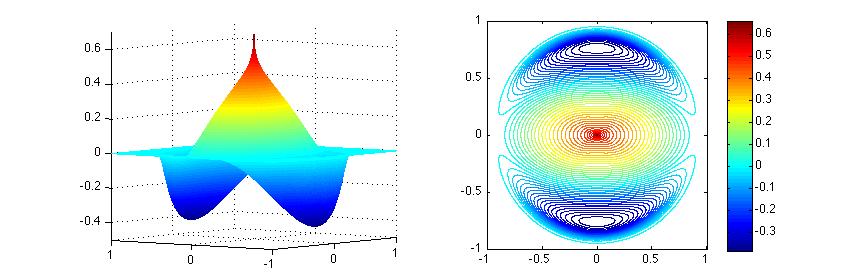
Figure 1. Helmholtz solution $U^1_{Hel}$
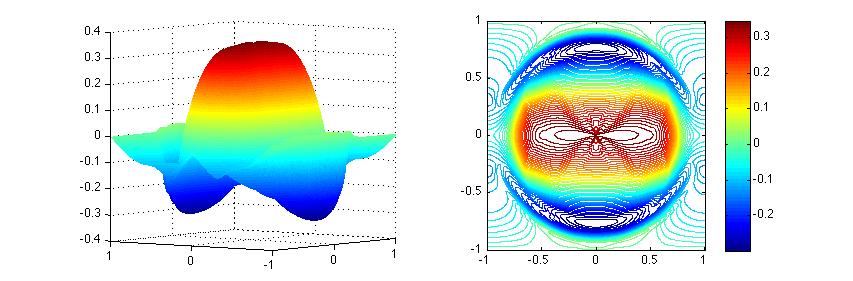
Figure 2. Hierarchical solution $U^1_{Bdd}$
We also introduce two steps solution $U_{2step}=u_1+\nabla\Delta^{-1}r_1$, where $u_1$ is the result of the first hierarical step, and $r_1=F-\nabla u_1$. $U_{2step}$ is also uniformly bounded.
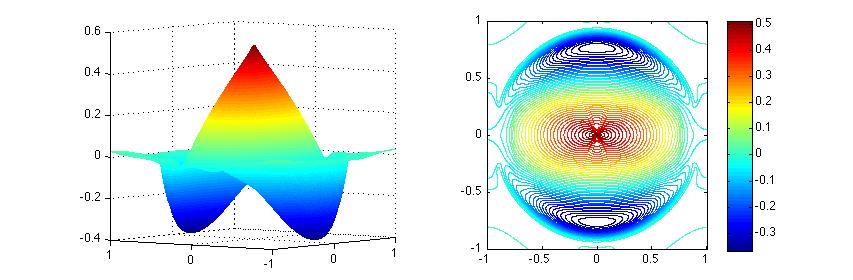
Figure 3. Two steps solution $U^1_{2step}$
Resources
- Eitan Tadmor, Changhui Tan. Hierarchical construction of bounded solutions of divU = F in critical regularity spaces. "Nonlinear Partial Differential Equations", Proceedings of the 2010 Abel Symposium held in Oslo, Sep. 2010 (H. Holden & K. Karlsen eds.), Abel Symposia 7, Springer 2011, 255-269. [View PDF]
References
- [AF03] R. Adams and J. Fournier, Sobolev Spaces, 2nd ed., Academic Press, 2003.
- [BB03] J. Bourgain and H. Brezis, On the equation $\nabla\cdot Y=f$ and application to control of phases, J. Amer. Math. Soc. 16 (2003), no. 2, 393--426.
- [BB07] J. Bourgain and H. Brezis, New estimates for elliptic equations and Hodge type systems, J. Eur. Math. Soc. (JEMS) 9 (2007), no. 2, 277--315.
- [BS88] C. Bennett and R. Sharpley, Interpolation of operators, Pure and Applied Mathematics, vol. 129, Academic Press, Orlando, 1988.
- [Ch04] A. Chambolle, An algorithm for total variation minimization and applications, Journal of Mathematical Imaging and Vision, vol. 20, pp. 89-97, 2004.
- [Co] A. Cohen, private communication.
- [DFT05] B. Dacorogna, N. Fusco and L. Tartar, On the solvability of the equation $\nabla\cdot u=f$ in $L^1$ and in $C^0$, Rend. Mat. Acc. Lincei. s. 9 v. 14 (2003), pp. 239-245.
- [ET99] I. Ekeland and R. Temam, Convex Analysis and Variational Problems, SIAM, 1999.
- [Ev10] L. Evans, Partial Differential Equations, 2nd ed., American Mathematical Society, 2010.
- [Ma06] Y. Maday, $L^{\infty}$-stable approximation of a solution to $\nabla\cdot Y=f$ for $f\in L^2$ in two dimensions, J. Sci. Comput. 28(2-3) (2006), pp. 451-458.
- [ON63] R. O'Neil, Convolution operators and $L^{p,q}$ spaces, Duke Math, J. 30, 129-143, 1963.
- [ROF92] L. Rudin, S. Osher and E. Fatemi, Nonlinear Total Variation Based Noise Removal Algorithms, Physica D, 60, pp. 259-268, 1992.
- [Ta89] L. Tartar, Lorentz spaces and applications, Lecture notes, Carnegie Mellon University, 1989.
- [Ta15] E. Tadmor, Hierarchical construction of bounded solutions in critical regularity spaces, Communications on Pure and Applied Mathematics, 2015.
- [TNV04] E. Tadmor, S. Nezzar and L. Vese, A Multiscale Image Representation Using Hierarchical $(BV,L^2)$ Decomposition}, Multiscale Modeling and Simulation: A SIAM Interdisciplinary Journal, Volume 2, Number 4, pp. 554-579, 2004.
- [TNV08] E. Tadmor, S. Nezzar and L. Vese, Hierarchical decomposition of images with applications to deblurring, denoising and segmentation, Communications in Math. Sciences 6(2) (2008) 281-307.